

ESTATE WILDFIRE RISK ASSESSMENT
Estate Wildfire Risk Assessments Across Napa, Solano & Contra Costa
Protect your main residence, your outbuildings, and your grounds with a detailed on-site assessment and a detailed action plan for every structure on your property.
$1M
Liability Insurance
4
Verified Certifications
3
Counties Served
ESTATE WILDFIRE RISK ASSESSMENT
Estate Wildfire Risk Assessments For Main Residences, Outbuildings And Grounds
Estate wildfire risk assessments for owners across Napa Valley hillside AVAs, Lamorinda estates, and Solano hillside properties, from single residence estates with grounds and gatehouse to multi-structure compounds with guest houses, staff quarters, and working outbuildings. Whether you own a five acre hillside home or a fifty acre working estate, a Red Lion estate wildfire risk assessment covers the specific ways wildfire threatens your main residence, your outbuildings, and your grounds.
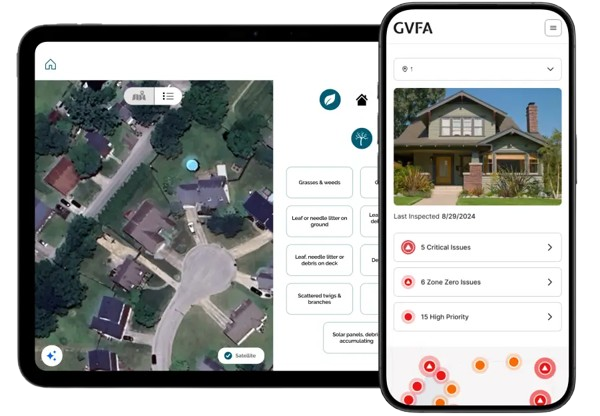
Every assessment is delivered online in partnership with Fire Aside
What You Receive
Online Interactive Estate Wildfire Risk Assessment Report You Can Action
Every estate wildfire risk assessment is delivered as a online interactive report you can share with your owner, estate manager, insurance broker, and family office in one click. Whether you’re preparing for an insurance renewal, a property walkthrough, or a staff safety briefing, the report is ready to travel with you..
- Annotated property maps of structures and grounds
- Full photo documentation with GPS tags
- Prioritized action items ranked by cost and fire risk impact
- Insurance ready documentation for estate policies
- One page action summary for owner review
- Cal Fire Chapter 7A compliance notes where applicable
why choose red lion wildfire defense
Certified Estate Wildfire Risk Assessment Specialists
Wildfire defense is safety critical work, and estate owners deserve to know exactly who is walking their property. Our credentials in arboriculture, wildland fire, and community protection are verifiable before we start.
ISA Certified Arborist
Essential for evaluating trees across your estate, from mature canopy near the main residence to specimen trees along private drives and grounds. Every estate wildfire risk assessment reflects real arboricultural expertise.
Certified Wildfire Mitigation Specialist
Verifies advanced knowledge in wildland fire science, home hardening, Home ignition zone, defensible space and community-wide planning within the Wildland-Urban Interface (WUI).
Cal Fire Timber Ops
California state licensed for vegetation management. Authority to work across estate properties in State Responsibility Areas and Very High Fire Hazard Severity Zones, including Napa mountain AVAs and Lamorinda hillsides.
Fire Fighter 2 Level
Trained to the same wildfire response standards as federal and state firefighters. We can read how fire will move across your property because we trained in exactly how it moves.
What’s At Stake
Six Fronts Where Estates Face Wildfire Risk
Estate wildfire risk sits in six different places at once, from the main residence to the outbuildings to the private roads that connect them.
Main Residence And Guest Houses
Estate main residences and guest houses face different wildfire exposure depending on age, construction, and position on the property. Older estate architecture often carries pre-code wood shake roofs, unscreened vents, and combustible siding that current Chapter 7A hardening addresses.
Outbuildings And Working Structures
Estate outbuildings including pool houses, workshops, barns, and staff quarters are frequently overlooked in wildfire planning. Combustible construction and stored fuel loads around outbuildings create ignition points that carry fire back to the main residence.
Private Roads And Estate Access
Long private drives, gated entrances, and single access estates commonly slow or block engine response during a wildfire event. Whether crews can reach your main residence and outbuildings determines whether responders defend the estate or retreat from it.
Grounds And Landscape
Mature canopy over structures, specimen trees near residences, and grounds-scale landscape create wildfire fuel loading that yard-scale defensible space cannot address. Estate defensible space operates at a different scope and standard than residential mitigation.
Water And Utility Infrastructure
Estate water infrastructure including wells, ponds, backup generators, and private storage supports year round operations. Whether firefighters can draft from your pond, whether your well pump has fire event backup power, and whether infrastructure is accessible all determine defensibility.
Insurance And Legacy Value
Estate insurance layers property, umbrella, and specialty coverage across high-value structures and contents. A documented estate wildfire risk assessment supports renewal at every layer, while undocumented risk drives non-renewal across the entire portfolio.
Our Process
4 Steps From Site Visit To Online Interactive Risk Report
01
Estate Consultation
A free 30 minute call with your owner, estate manager, or property manager to understand your estate, current concerns, and mitigation goals.
02
Property Walkthrough
A certified specialist walks your estate, from main residence and guest houses to outbuildings, private roads, and grounds. Typically 6 to 10 hours on site depending on property size.
03
Online Report
You receive a fully online interactive report with property maps, GPS tagged photos, and prioritized recommendations your team can act on immediately.
04
Estate Review Meeting
We walk your owner and estate manager through findings and help sequence the work, whether it’s in-house maintenance, contractor engagement.
faq
Common Questions From Estate Owners And Estate Managers
How long does an estate wildfire risk assessment take?
An estate wildfire risk assessment typically takes 6 to 10 hours on site for a single property walkthrough, plus 7 to 10 business days for report preparation and delivery. Multi-structure estates with guest houses, working outbuildings, and grounds-scale landscape may require a second site visit.
Who at an estate typically requests a wildfire risk assessment?
Estate wildfire risk assessments are typically requested by the estate owner, estate manager, or property manager. Family office representatives and insurance brokers also initiate assessments on behalf of high-value property portfolios. We provide a discreet written scope and proposal after the free consultation call.
Is an estate wildfire risk assessment different from a residential assessment?
Estate wildfire risk assessments cover multi-structure properties including main residence, guest houses, pool houses, workshops, staff quarters, and outbuildings, plus private roads, well systems, and grounds-scale landscape. Residential assessments cover single family homes on standard lots. Estate scope, complexity, and insurance requirements are fundamentally different.
How much does an estate wildfire risk assessment cost?
Estate wildfire risk assessment pricing depends on property size, number of structures, private road length, landscape scope, and infrastructure complexity. Most estate assessments range from $6,000 to $25,000. We provide a fixed price quote after the free consultation call, so estate owners can approve a known scope rather than an open estimate.
How does an estate assessment differ from a Cal Fire defensible space inspection?
Cal Fire defensible space inspections check individual structures for minimum compliance under Public Resources Code 4291. Estate wildfire risk assessments evaluate the full property including main residence hardening, outbuilding vulnerability, private road access for engine response, well and pond water infrastructure, and grounds-scale defensible space. Cal Fire inspections don’t cover any of this at estate scale.
Can a wildfire risk assessment help keep estate insurance from being cancelled?
Yes. Documented estate wildfire risk assessments support renewal across the layered coverage estates typically carry: property, umbrella, high-value specialty, and excess liability. California’s Sustainable Insurance Strategy requires insurers to factor documented mitigation into pricing. Estates in Very High Fire Hazard Severity Zones increasingly need documented assessment to maintain coverage at any premium.
Are Napa hillside estates at higher wildfire risk than valley properties?
Yes. Napa hillside AVAs including Mount Veeder, Howell Mountain, Atlas Peak, Spring Mountain, and Diamond Mountain sit within Very High Fire Hazard Severity Zones. Steep terrain, single access roads, mature canopy, and proximity to wildland make hillside estates significantly higher risk than valley floor properties. Estate wildfire risk assessments in these AVAs prioritize access, structure hardening, and grounds-scale defensible space.
Do estate wildfire assessments cover guest houses and outbuildings?
Yes. Estate wildfire risk assessments cover every structure on the property including main residence, guest houses, pool houses, workshops, barns, staff quarters, garages, and any working outbuildings. Each structure receives individual ember pathway analysis, defensible space evaluation, and prioritized hardening recommendations. Multi-structure scope is what distinguishes estate assessments from residential assessments.
How do estates plan wildfire evacuation for staff and household workers?
Estate evacuation planning for staff differs from family evacuation. Household staff, groundskeepers, and property managers often live on site or work variable schedules, and estate access roads may be shared or gated. Estate wildfire risk assessments include staff evacuation protocols, communication procedures during red flag events, and coordination frameworks for household teams during wildfire response.
WE KNOW ESTATES
WE KNOW ESTATE PROPERTIES
Estates are not single family homes or vineyards. Main residences carry legacy value that homes don’t approach, outbuildings multiply structural exposure in ways homes never do, and private roads create access complexity that vineyards don’t face. We assess the specific ways wildfire threatens estate properties, not just what looks unmaintained from the front gate. We evaluate whether your entire property can be defended under wind driven fire conditions, not just whether the main residence is clear on a normal day. We check whether outbuildings hold up against ember attack and whether responders can reach every structure on the estate. Generic wildfire assessments miss all of this. Ours is designed around it.
Schedule Consultation Call
Schedule Your Estate Wildfire Risk Assessment Consultation
Free 30 minute consultation call with your owner, GM, or operations manager. We will tell you honestly whether a full estate wildfire risk assessment fits your operation, and how much difference it will make.